
Children of Morta
PlaydigiousRole Playing
4.4299.00 Reviews
- Version
- 1.1.4
- Installs
- 100.00K
- Age Rating
- Teen
Screenshots
Our Review of Children of Morta
 Analysis by Appyee
I like Children of Morta most when I treat a run as a small expedition rather than a promise to clear a whole game in one sitting. I enter a dangerous area, learn what its enemies demand, collect what I can, and see how far the family can push before the attempt ends. That straightforward rhythm gives this role-playing game its pull: every fight is immediate, but each outing also belongs to a larger story about people protecting one another.
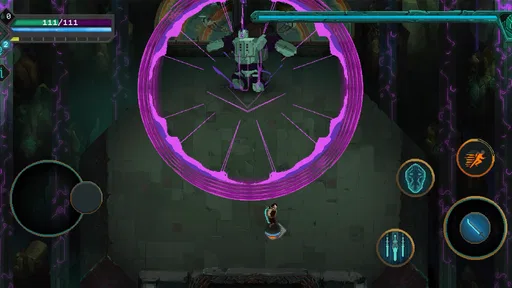
The first fight tells you what kind of adventure this is
Made for mobile by Playdigious, this is a paid game rather than a free download built around a long wait before the action starts. The listed price is $6.99, with in-app purchases shown at $0.49 per item, so I’d check the purchase details before handing over a device to a child. Its Teen age rating is also worth keeping in mind. The game is available from version 1.1.4 and requires Android 10 or later; those are practical checks to make before buying, especially if you’re installing it on an older phone or tablet.
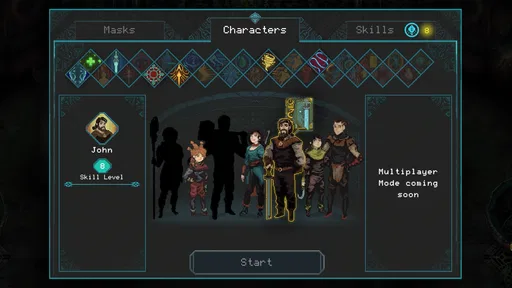
On a first run, I’d choose a character whose style feels comfortable instead of trying to optimize the whole family immediately. John’s sword gives you a direct way to learn the rhythm of approaching enemies and responding to danger, while Lucy’s magic asks you to think differently about spacing and attacks. The useful takeaway is that character choice changes how you read a room. If a fight feels awkward, that doesn’t automatically mean you’re playing badly; another family member may suit the situation or your instincts better.
That makes the opening hours a good fit for short, focused play. A commute, a quiet break, or a little time after dinner can be enough to tackle an outing without needing to remember a complicated plan the next day. I’d still avoid starting when I’m likely to be interrupted mid-fight: action games demand attention, and a pause in real life can be more disruptive than a deliberately short session.
Combat feels best when you learn, not just mash
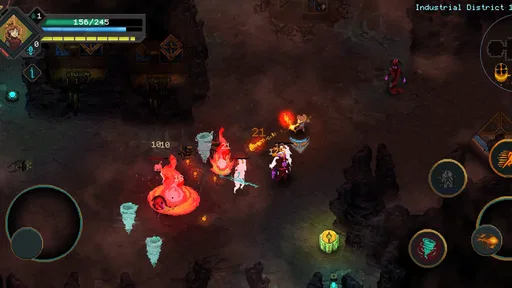
The attacks are easy to pick up, but the satisfying part comes from reading enemy behavior and choosing when to commit. If I rush forward without considering the space around me, a crowd can make the fight feel messy. If I slow down, use the character’s strengths, and keep track of incoming threats, the same encounter feels much more controlled. That difference is where the combat’s feedback works: a good decision is visible right away, while a careless one has a cost.
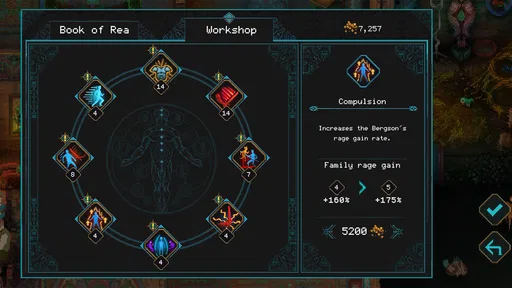
The skills and upgrades give repeated runs a sense of direction, but I wouldn’t treat every upgrade as a guarantee that the next room will be easy. Progress helps, yet the game still asks you to respond to what is happening in front of you. My practical tip is to use a new ability deliberately when you unlock it, rather than forgetting it in the middle of a hectic battle. Learning what it changes can be more useful than simply adding another move to the button routine.
There’s also a useful trade-off in the family roster: variety encourages experimentation, but switching characters means adjusting to different strengths instead of settling into one universal approach. If you’re used to an action RPG where one build can handle every situation, that change may take a little patience. I think it pays off when you give each character a fair trial, then choose based on the kind of encounter and the mood you’re in.
Rewards give each run a reason to matter
A run is more than a chain of fights because the story keeps the Bergsons’ struggle in view. The family premise gives the action an emotional frame, and learning about the characters makes returning to the dangerous places feel connected to something beyond a pile of enemies. I found that a welcome difference from games in the genre where the only reason to enter another dungeon is to chase stronger equipment or a bigger number.
The reward is therefore split between immediate and longer-term satisfaction. In the moment, it’s the feeling of making it through a difficult stretch or finding a better way to use a character. Across sessions, it’s seeing the family’s story develop and becoming more comfortable with the combat. That mix suits players who like action but also want a reason to care about what happens between fights.
Randomly generated dungeons can make another attempt feel less like repeating a memorized route. I wouldn’t read that as a promise that every run will feel radically different: the core action and the familiar cast still define the experience. The benefit is more modest and more useful. You can’t rely on perfect recall alone, so paying attention to the current layout and enemy mix remains part of the play.
Why a run ends—and why I start another
Roguelite structure brings a reset into the rhythm. An outing can end before I’ve reached everything I hoped to see, which is a real frustration if I want a steady, uninterrupted march through a plot. But the reset also makes the next attempt understandable: I can return with more knowledge, try a different character, or simply approach the next set of fights with better judgment. Failure is easier to accept when I can name what I learned from it.
That loop is the main reason I’d recommend the game to someone who enjoys making small improvements over several sessions. It is less suitable if you want every play session to deliver a neat chapter ending or if repeated attempts feel like wasted time. Before buying, I’d ask myself whether I enjoy action games where learning the encounter is part of the reward. If the answer is no, a more linear role-playing game may be a better match.
Where it sits among mobile RPGs
Children of Morta sits between a conventional story-led RPG and a quick arcade-style action game. Compared with a menu-heavy role-playing game, it puts more emphasis on movement, timing, and reacting during fights; compared with a pure arcade brawler, its family story and character development give each expedition more context. That balance is its appeal, but it also means it won’t satisfy someone looking mainly for deep equipment spreadsheets, relaxed turn-based battles, or a plot that advances without combat interruptions.
The game has a 4.5 average from around 5,200 ratings, with over 100,000 installs. Those figures suggest it has found an audience, but they can’t tell you whether its reset-heavy structure is your kind of fun. I’d use them as a little reassurance, not as a substitute for considering how you like to play. The developer is Playdigious, and the game was released on October 3, 2024.
A good fit for a deliberate mobile session
Picture an evening when you have a short stretch of free time and want more than a throwaway round, but don’t want to commit to a lengthy role-playing session. I’d pick a Bergson, head into a run, and focus on one practical goal: learn an enemy pattern, test a skill, or see how far I can get without rushing. If real life cuts the session short, the next outing still has a clear starting point. That’s a more reliable use case than opening it while distracted and expecting the story to carry me through automatically.
It’s also a more appealing choice for someone who enjoys playing alongside another person, since the original game’s co-op mode can make covering each other and coordinating attacks part of the fun. On mobile, I’d check how the version you’re considering handles the way you intend to play before making a purchase. If solo play is your priority, the game still has its family cast and run-based structure to lean on; if shared play is essential, confirm that the available setup suits both players rather than assuming every platform works identically.
For a parent or anyone buying on a shared device, the practical decision is simple: check the Teen rating, make sure the phone meets the Android 10 minimum, and review the purchase prompts before someone else starts playing. The base price makes this a considered purchase rather than a casual free install, so I’d want to be sure the recipient enjoys action combat and can tolerate a run ending without a tidy stopping point. Those checks matter more than whether the game’s pixel art looks appealing in a screenshot.
Small choices that make the loop smoother
I’d keep a simple mental note after a failed attempt: which character I used, what kind of encounter caused trouble, and whether I was losing control because of positioning or because I hadn’t used a skill well. That is more actionable than deciding only that a run went badly. On the next try, change one thing at a time. If you switch characters, upgrade several skills, and alter your approach all at once, it becomes harder to tell what actually helped.
Likewise, don’t treat the family roster as a checklist that must be mastered immediately. Trying different members is valuable because their distinct abilities can change your approach, but it’s also reasonable to spend time with the one whose combat feels natural. I’d branch out when a run starts to feel stale or a particular style is not working, rather than forcing myself to rotate just for the sake of variety. The best use of choice is to make the next attempt more interesting, not more complicated.
One limitation worth weighing is that procedural variation doesn’t remove repetition from a game built around returning to combat. New layouts can keep exploration from becoming a memorized routine, but you will still be fighting through dangerous areas and learning through attempts. If you strongly prefer a story game where the main pleasure is seeing new scenes with minimal replay, this structure may wear thin. If you like the small satisfaction of recognizing a mistake and correcting it, the repeated action is part of the point.
The asking price also changes how I’d compare it with the usual mobile alternatives. A free-to-start RPG may be easier to sample, while a paid game asks you to decide up front whether its particular rhythm suits you. Here, I’d value the family-focused story, character variation, and hands-on combat together; buying solely because it is an RPG would be a weaker reason. The small in-app purchase amount is listed separately, so I’d look at the purchase screen and decide whether I’m comfortable with that model instead of assuming the initial price tells the whole story.
The Storyline: A Family Affair
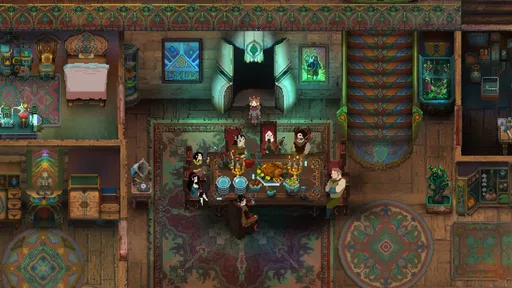
The heart of Children of Morta is its compelling storyline, which revolves around the Bergson family. These guys are not your average family; they’re guardians of Mount Morta, and they’re up against dark corruption that threatens their world. What’s cool here is how the game manages to weave in family dynamics along with epic battles. Each character has their own unique abilities, which makes it super fun to switch between them as you progress. You’ll find yourself getting attached to each family member and their personal struggles.
Gameplay: Hack-and-Slash Goodness
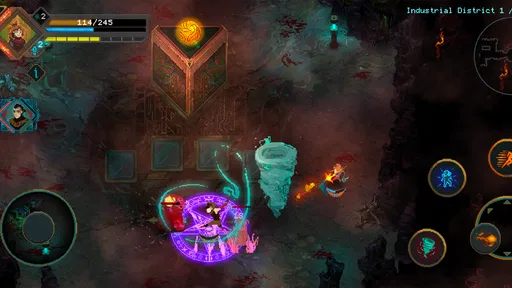
If you’re into hack-and-slash games, this one’s going to be right up your alley. The combat is smooth and satisfying, and there’s just something incredibly rewarding about taking down hordes of enemies. The controls are intuitive, which means you won’t be fumbling around trying to figure out how to pull off a move. Plus, the variety of skills available keeps the gameplay fresh. I especially enjoyed the combo attacks and the ability to upgrade my skills as the game progressed.
One of my favorite aspects is the game's co-op mode. Playing alongside a friend adds a whole new layer of strategy and fun. You can tag team enemies and cover each other’s backs, which is super handy during tougher battles.
Visuals and Sound: A Feast for the Senses
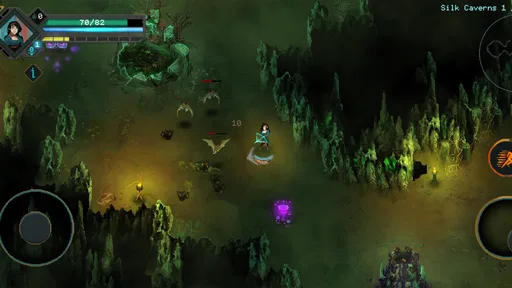
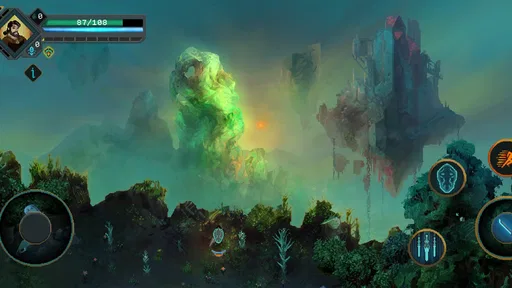
The art style in Children of Morta is just stunning. It’s got this pixel art vibe that feels both retro and modern at the same time. The environments are beautifully crafted, with each dungeon and terrain brimming with detail. The color palettes change as you move through different areas, keeping things visually interesting.
And the soundtrack? Oh man, it’s top-notch. The music sets the mood perfectly, whether you’re in the middle of an intense battle or exploring the lush landscapes. The sound effects are equally immersive, making every swing of your sword or cast spell feel impactful.
Character Development: Diverse and Engaging
What I found particularly engaging was how the game handles character development. Each member of the Bergson family has their own backstory and skill set. There’s John, the trusty sword-wielder, and his daughter Lucy, who’s more into magic. They all bring something different to the table, and you’ll need to use their unique abilities to tackle various challenges.
As you play, you unlock more about their personalities and relationships, which really adds depth to the game. It’s not just about fighting monsters; it’s about understanding and growing with a family.
Replayability: Always Something New
The game’s replayability is another highlight. With randomly generated dungeons, you won’t be walking the same path twice. This keeps things fresh and exciting, as you never quite know what’s around the corner. Plus, the different difficulty settings offer a challenge for all skill levels. Whether you’re a casual gamer or a hardcore one, there’s something here for you.
And let’s not forget about the updates and additional content that the developers keep rolling out. It’s clear they’re committed to keeping this game alive and kicking, which is always a plus in my book.
In conclusion, Children of Morta is a game that beautifully blends storytelling, action, and art into a cohesive and engaging experience. Whether you’re in it for the family drama, the challenging combat, or the stunning visuals, it’s a journey worth taking. So, if you’re looking for a game that offers both heart and excitement, this might just be your next download. Give it a shot, and prepare to get lost in the world of Morta.
Verdict
Strengths of Children of Morta
- Engaging cooperative gameplay mode.
- Beautifully detailed pixel art graphics.
- Rich, emotional storytelling.
- Variety of characters with unique skills.
- Challenging but rewarding progression.
Limitations of Children of Morta
- Can become repetitive over time.
- Limited character customization options.
- Some players may find it difficult.
- Occasional performance issues on older devices.
- Requires significant time commitment.
Other Releases by Playdigious
View All


Similar Picks in This Category
View All
Hair Dye
CrazyLabs LTD4.4

Monster High™ Beauty Salon
CrazyLabs LTD4.5

Bus Simulator - Bus Games 3D
Jima Apps4.4

Flight Pilot: 3D Simulator
Wildlife Studios4.1


Super Stylist Fashion Makeover
CrazyLabs LTD4.4
Frequently Asked Questions
What is the gameplay style of Children of Morta?
Children of Morta is an action RPG with a strong narrative focus. It blends rogue-lite elements with a story-driven experience, offering procedurally generated dungeons and a unique pixel art style. Players control the Bergson family, each member having distinct abilities, to battle through waves of enemies and safeguard their home.
Is Children of Morta suitable for solo play or is it better with multiplayer?
Children of Morta is designed to offer a fulfilling experience both solo and in multiplayer. The game supports local co-op, allowing players to team up and strategically use different family members' abilities. Solo players can enjoy the rich story and character development, while multiplayer enhances teamwork and strategic planning.
How does the progression system work in Children of Morta?
The progression system in Children of Morta involves leveling up each family member individually. As you progress, you'll unlock new skills and abilities. The game also features a family-wide upgrade system that enhances the overall strength and capabilities of the entire Bergson clan, providing a sense of growth and development.
Are there any in-app purchases or additional content in Children of Morta?
Children of Morta does not include in-app purchases. The game offers a complete experience upon purchase, with no additional microtransactions. However, there are occasional updates and DLCs that expand the storyline and provide new content, which are optional and can enhance the gameplay experience.
What are the system requirements for Children of Morta on mobile devices?
Children of Morta requires a modern Android or iOS device with sufficient processing power and storage. It's best played on devices with at least 3GB of RAM and newer processors to ensure smooth gameplay. Make sure your device is updated to the latest operating system version for optimal performance and compatibility.
Play our best games!


